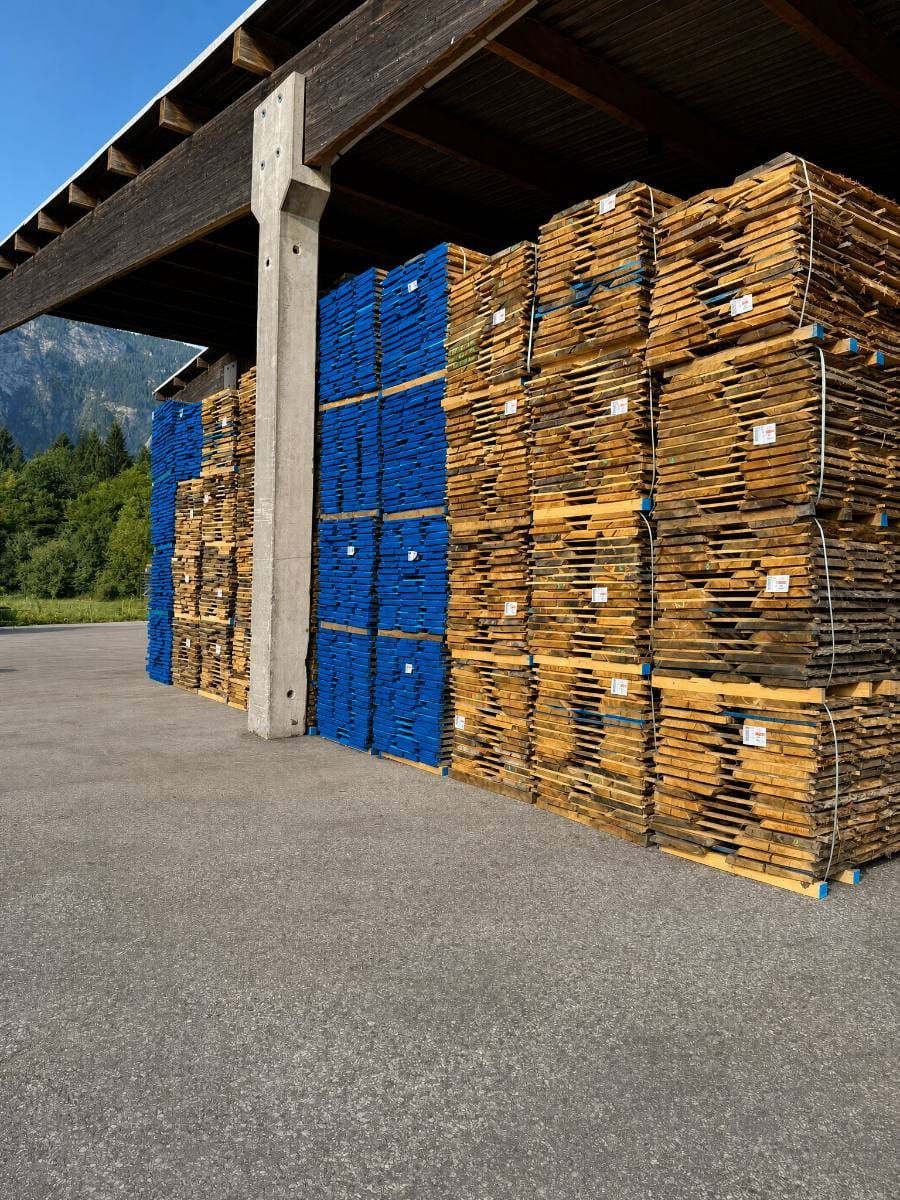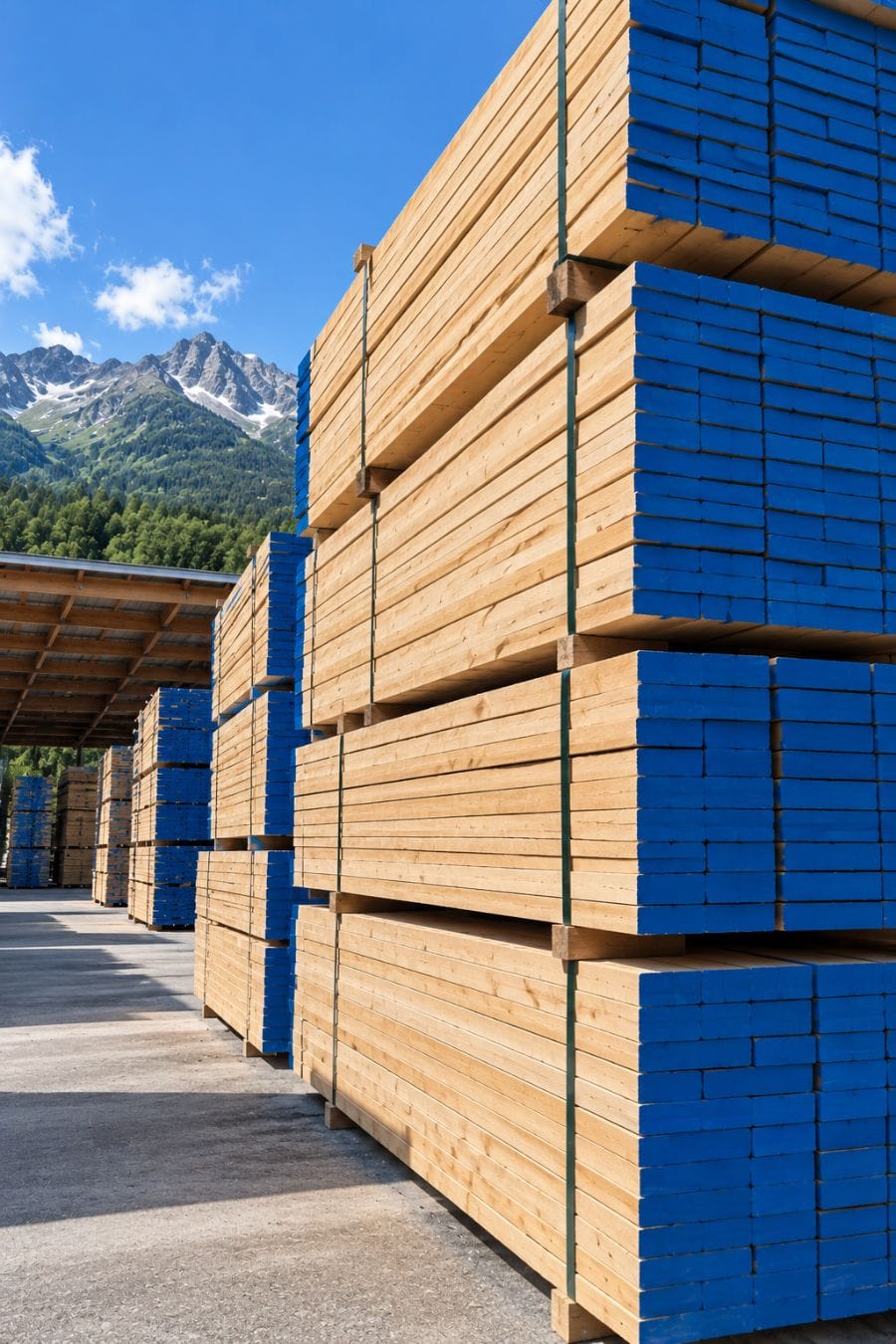
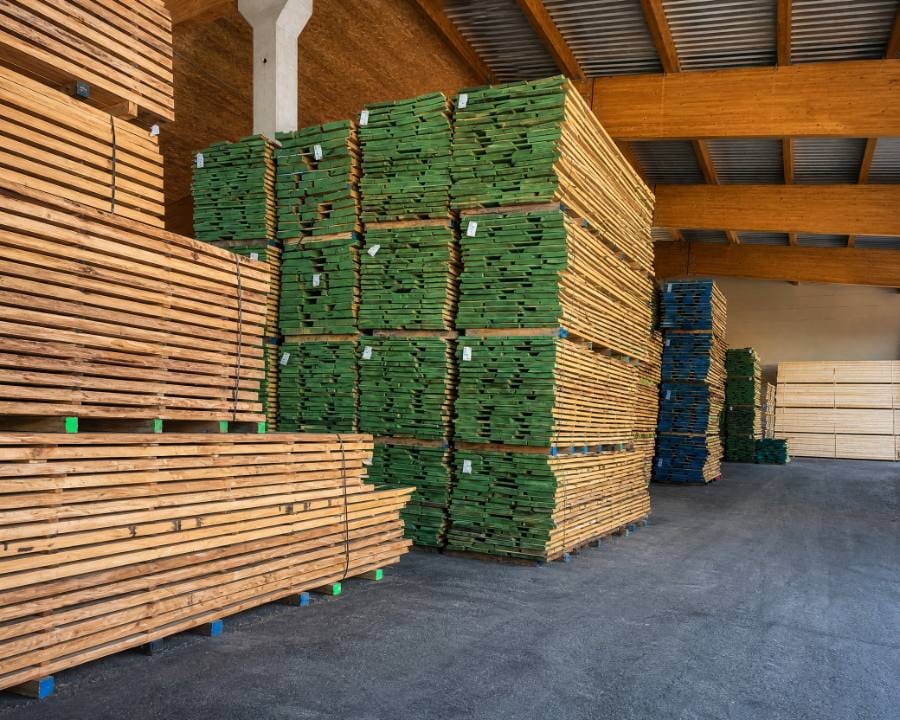
Two boards of the same species, the same thickness and the same origin can have very different prices. The reason is almost always one and the same: the selection grade. Understanding what sets Boules, A/B, Character and Rustic apart is the quickest way to stop comparing offers that cannot be compared.
What a selection grade measures
Not strength, not durability, not the species. A selection grade describes how much the wood shows its natural features: knots, sapwood, colour variation, small checks, deviated grain. The more uniform the material and the freer of these features, the rarer it is to get from a log, and the higher its value.
One consequence is worth stating outright: a higher grade is not «better». It is more uniform. For many projects uniformity is exactly what is not needed, and paying for it is a waste.
Boules
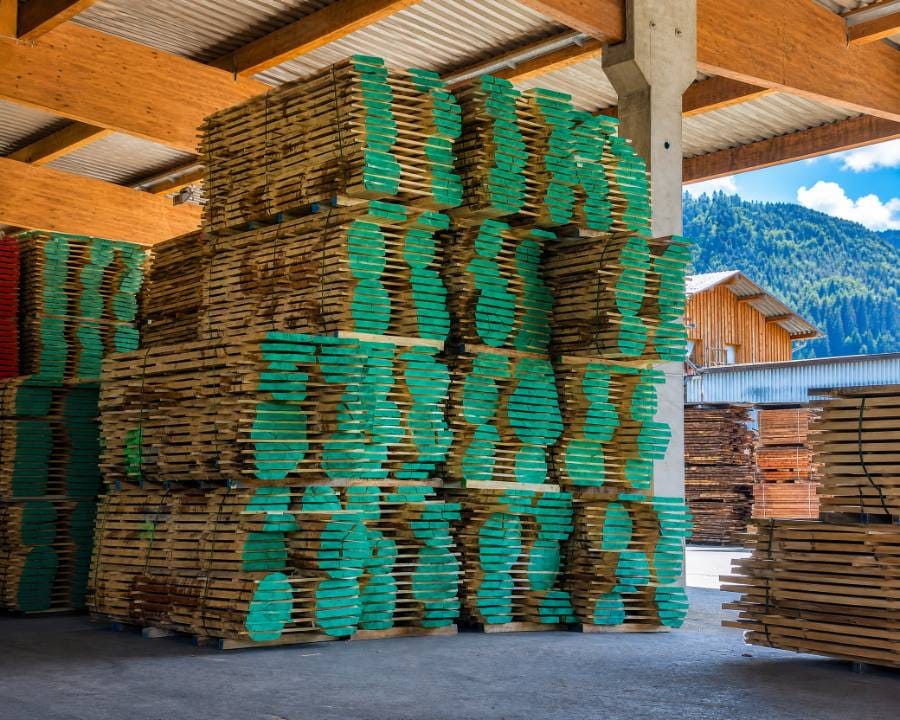
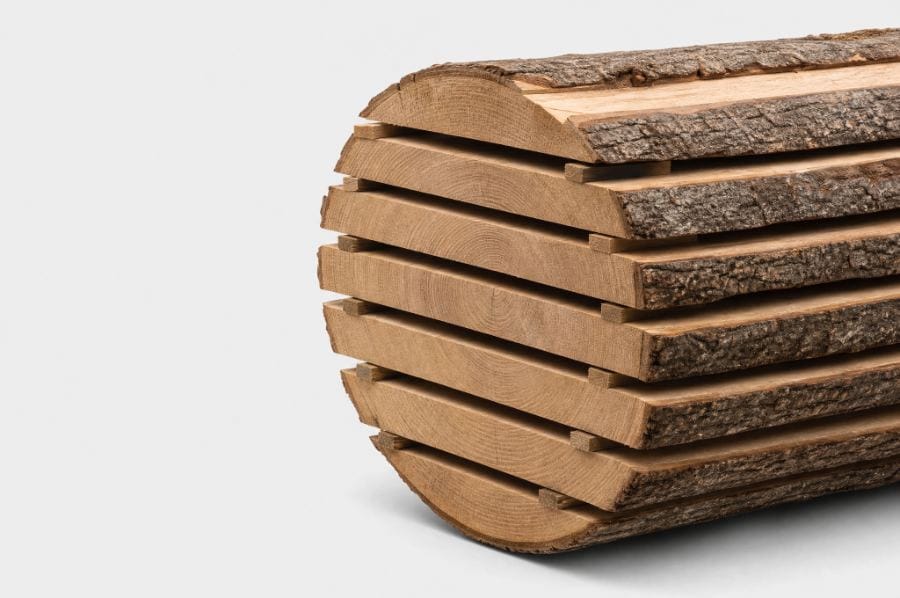
Boules is the log sawn and reassembled in its original shape, board by board, in the order it came off the saw. It is not strictly a defect grade: it is a way of selling timber that keeps the whole log as one unit.
The advantage is continuity. Adjacent boards share figure, colour and behaviour, because they come from the same spot in the same tree. For tabletops, book-matched doors or projects where the match between pieces is visible, it is the choice that solves the problem at the source. It does, however, mean buying the whole log, with all the widths it contains.
A/B
This is the Prime grade: material mostly free of defects, with no knots or very few, even colour and limited sapwood. It is the grade with the highest machining yield, because cutting waste is minimal and the usable piece is long.
It is chosen when the look must be clean and repeatable across large surfaces, or when the processing cannot afford to discard sections: long-strip flooring, fine furniture, exposed elements in series. The higher price is largely the price of predictability.
Character
Character allows small sound, live knots. «Sound» means the knot is intact and tight, not loose: the wood remains workable and structurally reliable, but the figure is clearly natural.
It is the grade that has gained the most ground in recent years, because it matches a contemporary taste that wants wood to look like wood. In practical terms it is often the best compromise: noticeably cheaper than A/B, still a good yield, a lively but controlled look.
Rustic
Rustic openly accepts all the natural features: larger knots, colour variation, small checks, sapwood. It is material that tells the story of the tree it comes from.
It should be chosen knowingly. The machining yield is lower, because part of the piece is discarded or used in short lengths, and this has to be factored into the quote: a Rustic bought without accounting for waste can cost as much as a Character. Where character is the project, though — panelling, tables with a strong identity, renovations in historic buildings — it is the right choice and also the most honest one.
“The wrong grade is not the lowest one: it is the one that does not match how the piece will be processed.”
Alp Timber Group
You cannot see the grade in a sample
A common mistake is to judge a grade by a single board. The grade describes a whole: the share of pieces within the lot that meet certain criteria, not a guarantee that every board is identical to the sample you saw. An A/B pack will contain a few less-than-perfect boards, and a Character pack a few almost clear ones.
That is why suppliers should be compared on the lot and not on the photograph, and why the grade alone is not enough: species, thickness, lengths and moisture must be agreed too. These five parameters together define what arrives, and they are the same ones we ask for when you fill in a quote request.
How to choose, in practice
It pays to start from the end. How much surface will be exposed, and from what distance it will be seen. How long the usable piece needs to be, because length determines how much defects matter. Whether the pieces need to match each other, and therefore whether log continuity is required. And finally which finish will be applied: an opaque finish reduces the importance of colour, a clear one amplifies it.
The four grades are described with photographic samples on the page Grades; the full list of species they apply to is on the page Species.
Frequently asked questions
Does Rustic mean waste wood?
No. It means the wood openly shows its natural features. It is a choice of aesthetics and end use, not a production defect.
Is Boules a quality grade?
Not strictly: it is the log sawn and reassembled in its original shape. It is used when continuity of figure and colour between adjacent boards matters.
Why does A/B cost more?
Because material mostly free of defects is rarer to get from a log, and because machining waste is minimal: you are also paying for the yield.
Do the grades apply to every species?
The selection scheme is the same, but the criteria apply to the typical features of each species: knottiness, sapwood and colour vary a lot from one species to another.