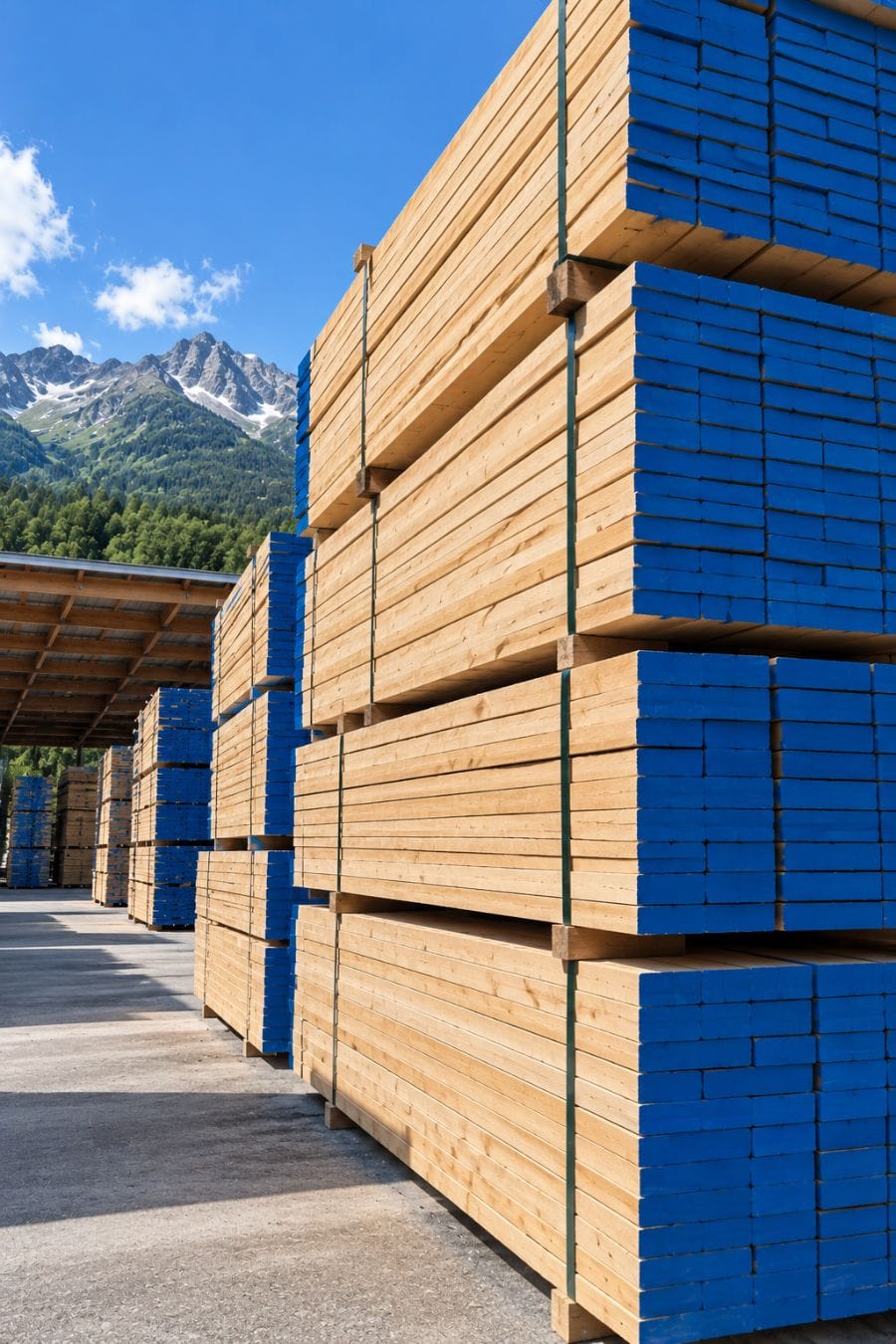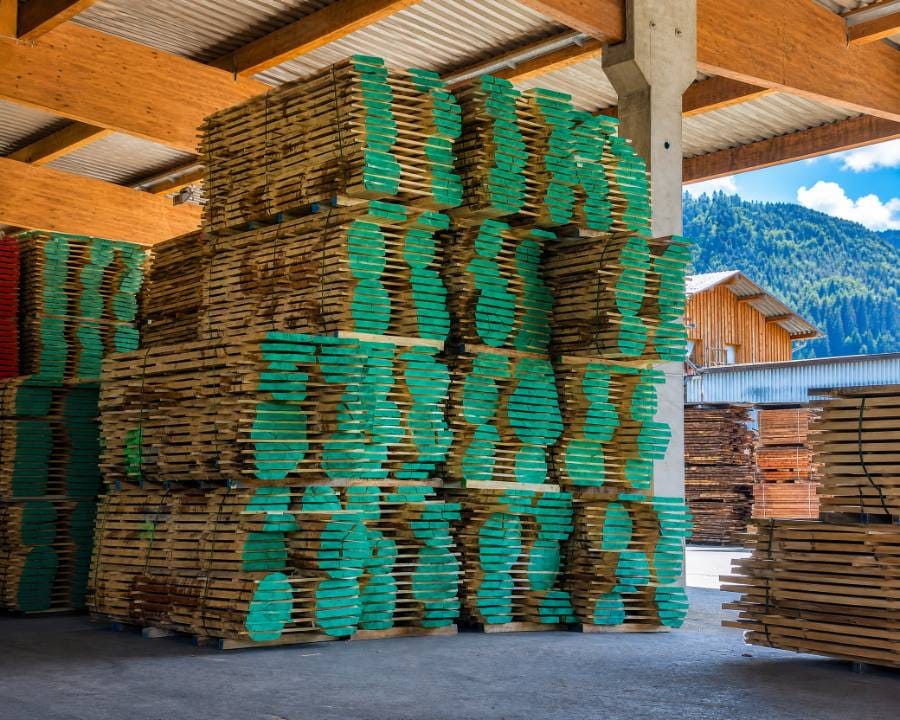
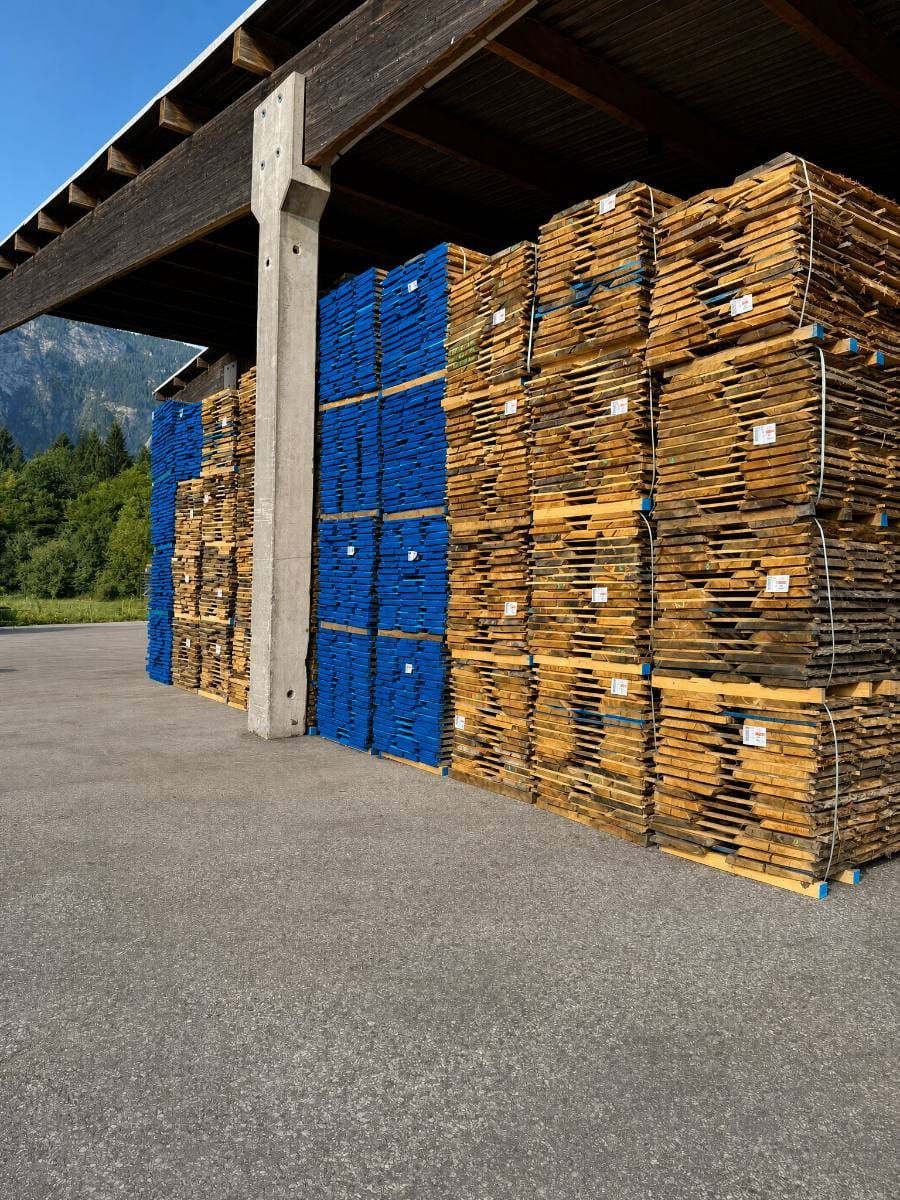
If there is one hardwood that needs no introduction on the European markets, it is oak. Quercus is the most requested of the eleven species the group processes, and the reason is not fashion: it is a combination of hardness, stability and availability that few other species bring together.
What oak is, botanically
Commercially, «oak» means the timber of European oak, in particular Quercus robur and Quercus petraea. It is a ring-porous wood: the large vessels are concentrated at the start of the annual ring, the small ones in the latewood. Hence the pronounced grain everyone recognises, and also the very different way the wood looks depending on the cut.
The heartwood is clearly distinct from the sapwood, which is paler and less durable. The heartwood contains tannins, responsible both for its good natural resistance and for its tendency to stain on contact with iron in the presence of moisture — a detail that matters when choosing screws and hardware.
Why it is so sought after
Three properties explain almost everything. The first is density: at normalised moisture, oak is clearly harder than the average European hardwood, which translates into wear resistance in floors and worktops. The second is dimensional stability once properly dried, which makes it reliable in large elements. The third is the natural durability of the heartwood, historically put to use in carpentry and outdoors.
To these is added a less technical but commercially decisive quality: oak ages well aesthetically. Its tone darkens and evens out over time instead of deteriorating, which makes it a low-risk choice for projects meant to last.
Quarter-sawn or flat-sawn: two different woods
The cut changes the material more than people think. In the quarter-sawn cut the medullary rays, very developed in oak, surface as silvery flecks; the result is a regular figure and, above all, more stable behaviour, because shrinkage across the width is smaller. In the flat-sawn cut the classic cathedral figure appears, livelier, with a greater tendency to cup.
That is why the same species can be recommended or advised against depending on the end use: a floor in a heated room and a veneered piece of furniture do not have the same needs. The choice of cut should be made together with the choice of selection grade.
Where it is used
Parquet and flooring are the most common use, followed by solid furniture and cabinetmaking. Windows and doors make use of its stability and durability; carpentry and beams of its mechanical behaviour. Then there is a historic use that still sustains a specific demand: cooperage, where oak's anatomical structure — watertight when cut correctly — remains irreplaceable.
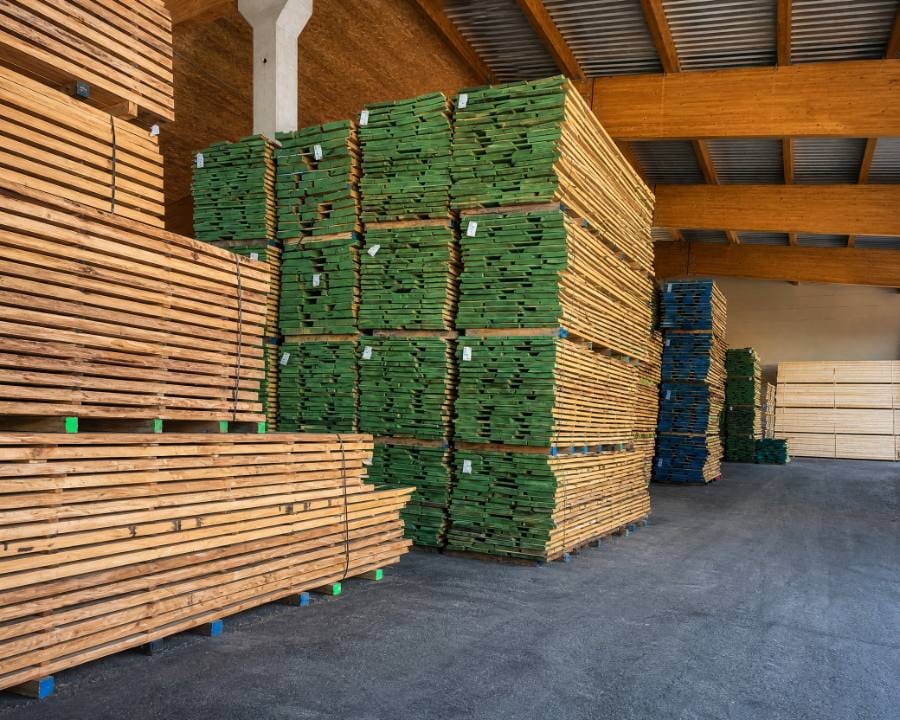
The group supplies oak logs and boards from both sawmills, Cecconwood and the Lemnforest, freshly sawn or dried on request.
“Oak forgives little in drying and a lot in use: if the cycle is done right, the board stays put for decades.”
Seasoning department, Arnoldstein
How it is graded
The number of knots, the sapwood allowed and the presence of natural features determine the grade. Of the four grades the group uses, A/B means material mostly free of defects, Character allows sound, live knots, Rustic openly accepts the natural features of oak, while Boules is the log sawn and reassembled in its original shape, board by board. The full comparison is on the page Grades.
A useful clarification: Rustic does not mean waste. It means the wood shows what it is. In many contemporary projects that is exactly the effect wanted, and it costs less than an A/B used for the same purpose.
Fresh or dried
Oak is available freshly sawn or dried, and the choice matters. Fresh costs less and lets those with seasoning capacity run the cycle in house, adapting it to their own end use. Dried arrives already stable and saves time, but the final moisture must be agreed: oak brought to the right value for a heated interior is not the same as what an exposed window frame needs.
Oak is also a species that punishes hasty drying more than others. Because of its density and ring-porous structure, a cycle that is too fast creates internal stresses that only show during processing, when the board is opened up and moves. That is why kiln time is not a cost that can be squeezed.
Practical tips
Three things are worth remembering on site and in the workshop. Oak stains on contact with ferrous metals in the presence of moisture: stainless steel or suitable treatments are better. Tannins can react with some water-based finishes, so a test beforehand is always worthwhile. And changes in ambient humidity must be considered at installation: wood moves, and room for it to do so must be allowed.
Frequently asked questions
What is the difference between «rovere» and «quercia»?
None botanically: «rovere» is the Italian trade name for European oak timber, mainly Quercus robur and Quercus petraea.
Is oak suitable for outdoor use?
The heartwood has good natural durability and has historically been used outdoors and in carpentry. The sapwood does not: it should be excluded from exposed uses.
Quarter-sawn or flat-sawn: which is better?
Quarter-sawn is more stable and shows the ray flecks; flat-sawn has the cathedral figure and is livelier. The choice depends on the end use, not on quality.
Why does oak turn black near screws?
Because of the tannins, which react with iron in the presence of moisture. With stainless or suitably protected hardware the problem does not arise.