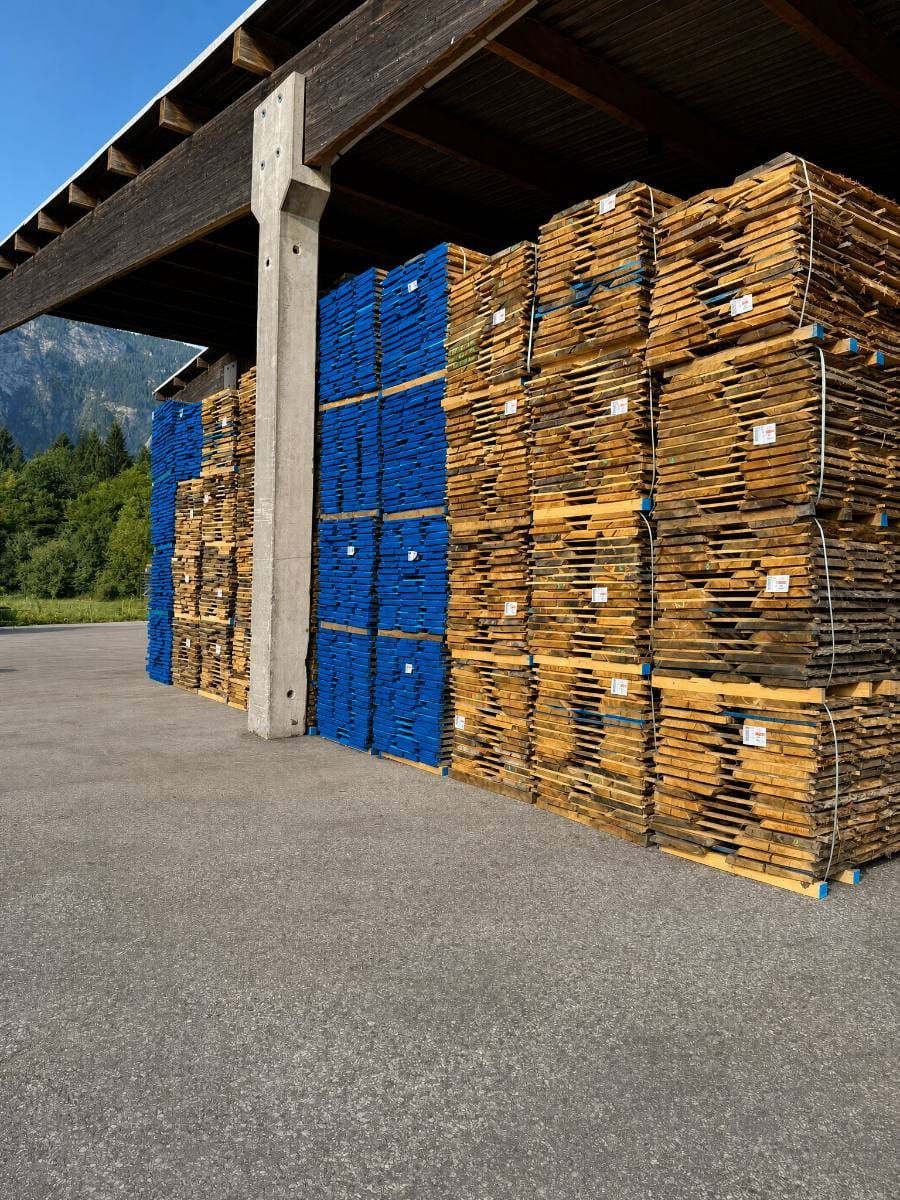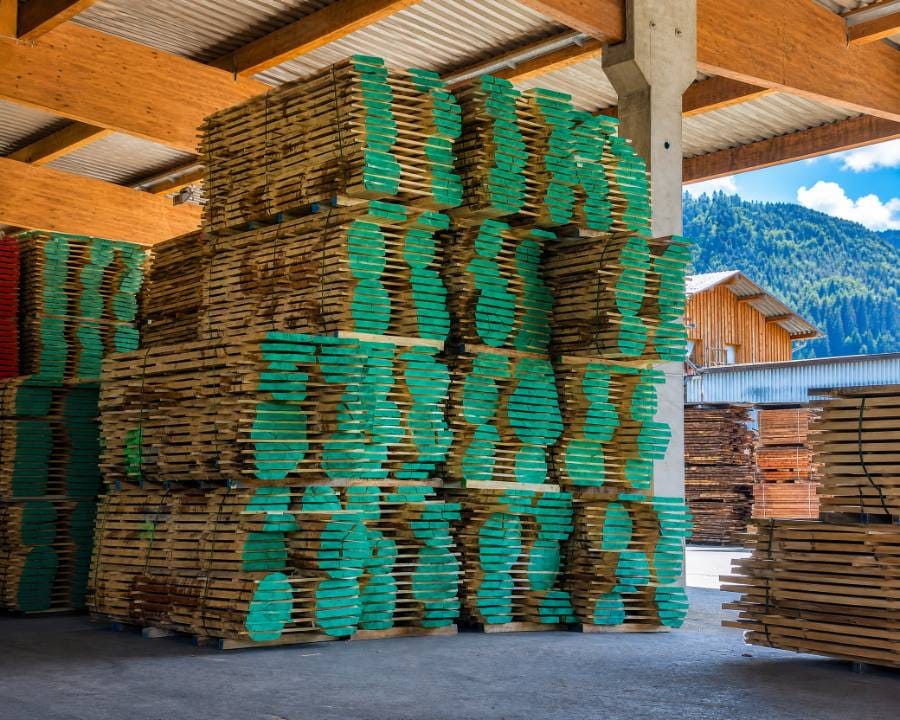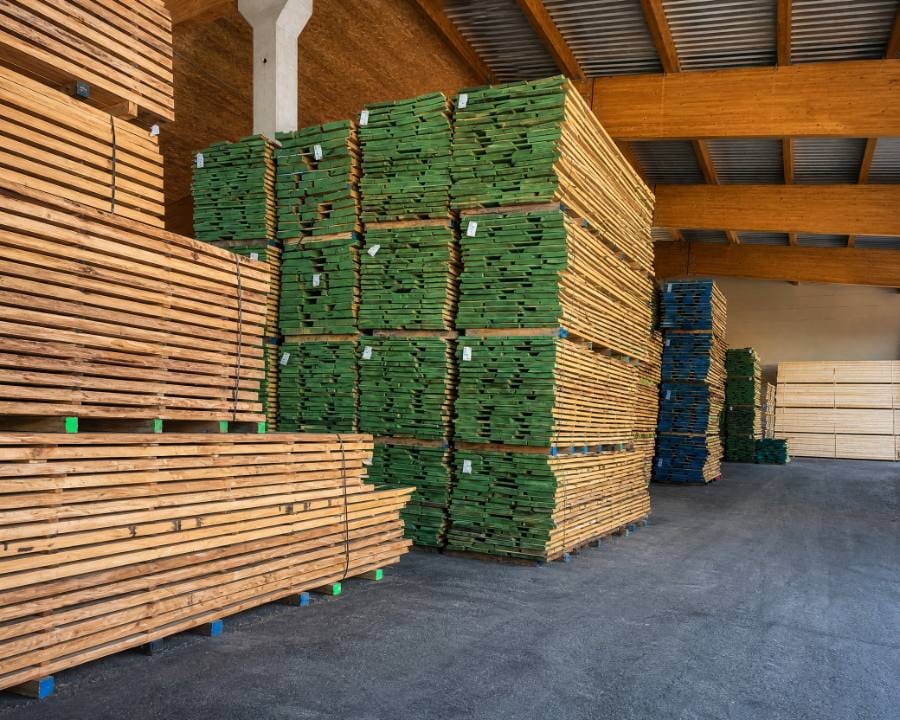

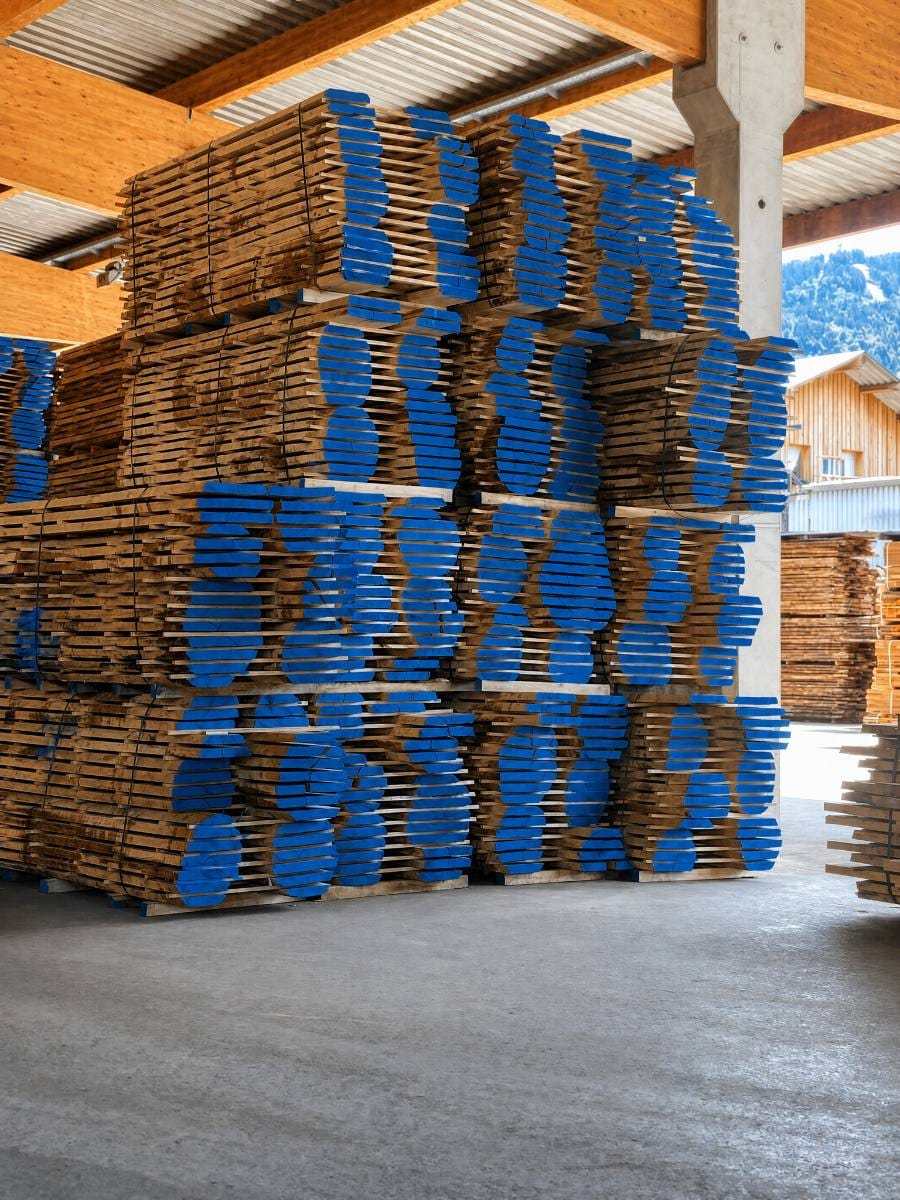
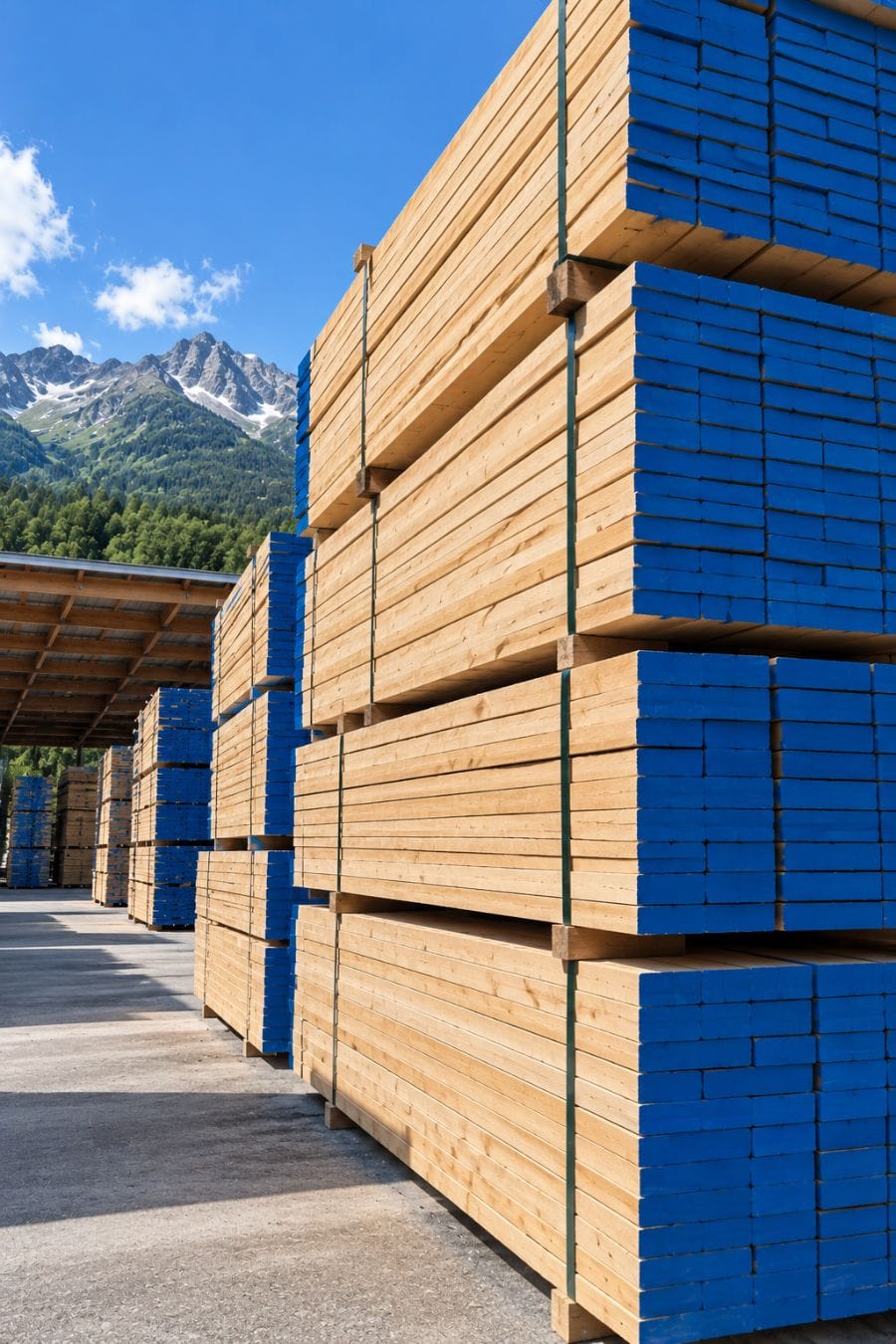
Seasoning is the step that separates any old board from a board ready for processing. In Arnoldstein the timber rests in the warehouse before going into the kiln, and every lot is followed until it reaches the moisture content agreed with the customer.
Why final moisture matters
Wood dried too quickly builds up stress and behaves unpredictably; wood dried too little keeps moving after installation. The value of a lot lies not only in the species or the selection grade, but in how consistent the moisture is across the whole pack.
That is why we take sample measurements at several points through the thickness, not just on the surface, and record the data for every kiln.
“Time spent in the kiln is not a cost: it is the guarantee that the board will behave as expected in the workshop.”
Seasoning department, Arnoldstein
The three stages of our cycle
1. Rest in the warehouse
Freshly sawn timber rests under cover, on stickers, so that surface moisture comes down gradually without thermal shock.
2. Kiln
The cycle is set according to species, thickness and end use: an oak flooring board does not follow the same curve as a lime carving board.
3. Conditioning and packing
Before loading, the pack is brought back into equilibrium and packed according to the transport: curtain-side truck for Europe, container for sea freight.
What to ask your supplier
Three questions tell you almost everything: what is the average moisture and its tolerance, at how many points was it measured, and how is the pack protected during transport. Every one of our order confirmations states this information explicitly.