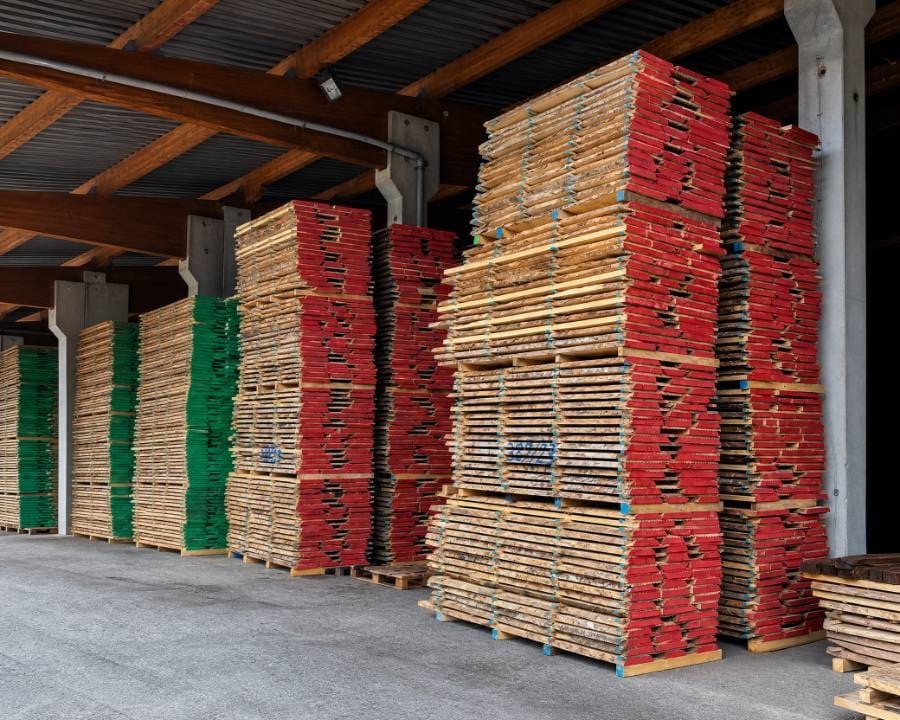
In the requests that reach a sawmill, oak takes up almost all the space. Yet two of the species the group processes — ash and lime — solve problems oak does not, often at a lower cost. They are worth looking at for what they do, not for their place in the price list.
Ash: elasticity above all
Fraxinus excelsior is a hard, pale, ring-porous wood like oak, with a pronounced and regular grain. What sets it apart, though, is not hardness: it is the combination of mechanical strength and elasticity. Ash absorbs impacts and springs back instead of breaking.
That is why tool handles, sports equipment and components under dynamic stress have historically been made of ash. The same property makes it the natural candidate for steam bending: heated and moistened, ash takes tight radii and holds them once cooled. Seats, chair backs and curved frames use it for this reason.
Where to be careful
The natural outdoor durability of ash is modest: it is not a wood for direct exposure without protection. And as with oak, the distinction between heartwood and sapwood must be kept in mind, even though in ash the colour contrast is less sharp — which, for anyone looking for a pale, even wood, is an aesthetic advantage.
Lime: the wood that lets itself be worked
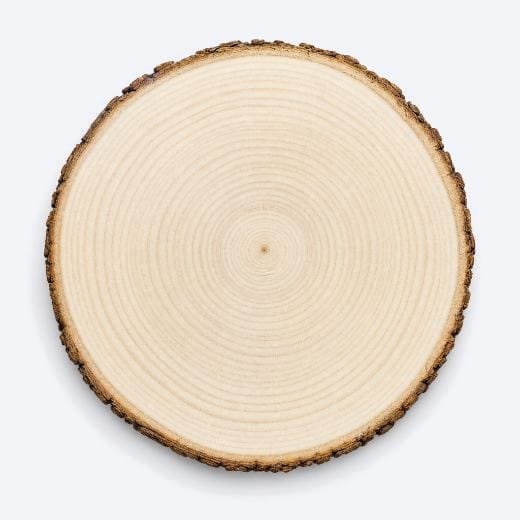
Tilia cordata is the opposite of ash in almost every respect. It is a soft, light, pale, diffuse-porous wood with a very fine and uniform texture. It has no pronounced grain, no big difference between heartwood and sapwood, no surprises inside the piece.
That uniformity is precisely its value. A fine-textured wood with no preferred direction cuts every way without tearing: exactly what sculpture and carving need, and lime has been their reference material for centuries. The same property makes it excellent for turning, model making and some parts of musical instruments.
What not to ask of it
Lime is not a structural wood and not a flooring wood: it is soft and dents. It has no natural outdoor durability. Asking it for mechanical performance means misusing it; asking it for workability and dimensional stability means using it well.
“Lime never imposes itself: it does exactly what you ask of it, and that is why carvers never switch.”
Alp Timber Group
Edged lime
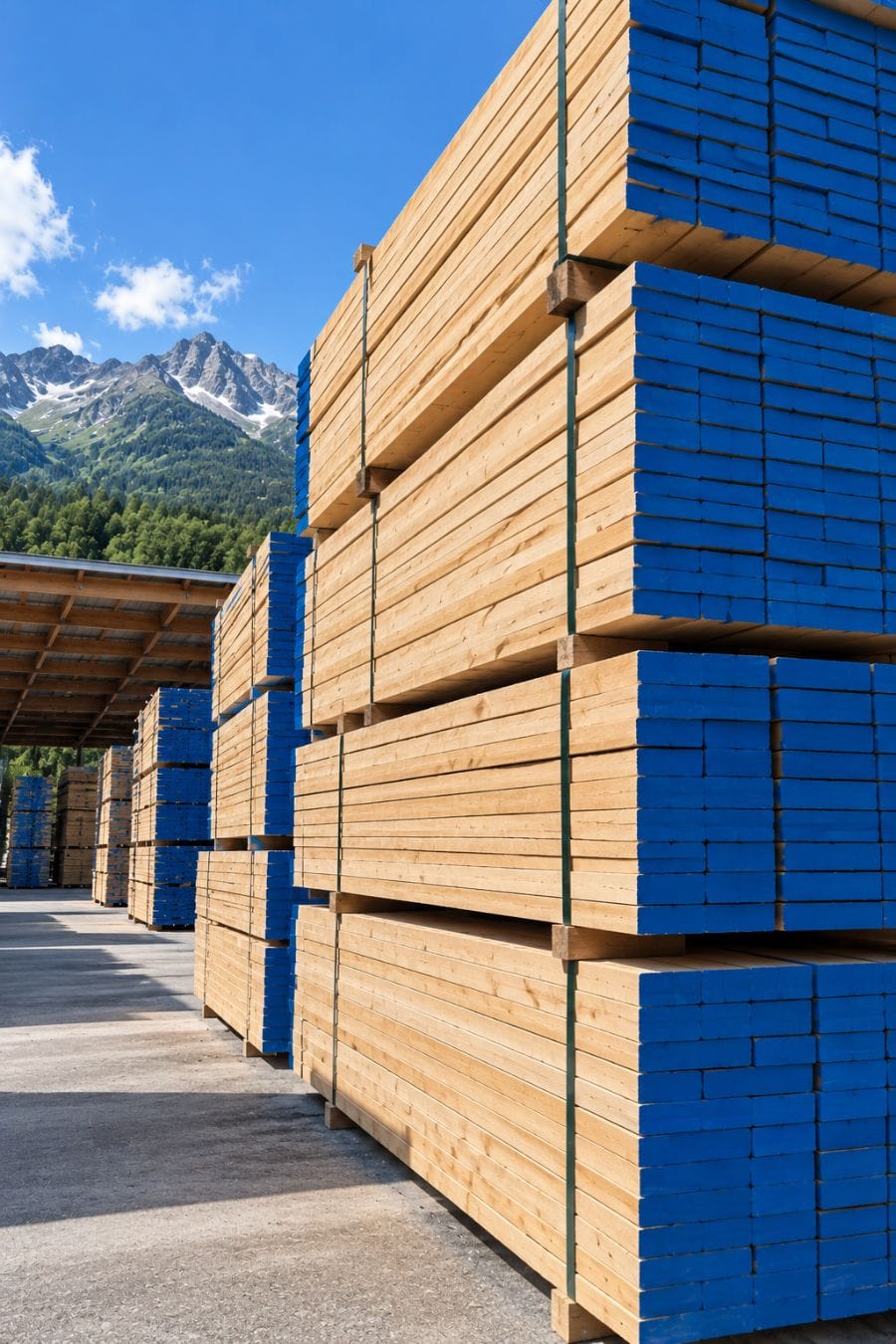
Lime holds a special place in the group: it is the only species for which Lemnforest produces edged boards, that is, square-edged boards supplied freshly sawn or kiln-dried. The drying kilns at the Tinca site have a capacity of 160 m³.
The difference between an edged and an unedged board is practical: the first arrives already regular, with parallel edges and known dimensions, and cuts down the work downstream. For series production it is often what makes a species worthwhile that would otherwise need too much preparation.
Two pale woods, two opposite behaviours
Side by side, ash and lime look like relatives: both pale, both without the strong heartwood–sapwood contrast typical of oak. In processing, however, they behave in opposite ways, and mixing them up costs time.
Ash is hard, elastic and strongly grained: it resists, it bends, and its figure is part of the final result. Lime is soft, light and fine-textured: it does not resist, it does not steam-bend with the same advantage, and its figure is practically absent. The first is chosen for how it holds up, the second for how it lets itself be cut.
Drying treats them differently too. Lime, diffuse-porous and low in density, loses water quickly and without much stress; ash, denser and ring-porous, needs a more careful cycle, especially in greater thicknesses.
When to choose them instead of oak
Ash should be considered whenever elasticity, impact resistance or bending is needed, and when a pale tone is wanted without giving up hardness. Lime whenever the priority is workability — carving, turning, models, internal hidden parts that must stay stable and light.
Both are on the list of the group's eleven species, together with cherry, acacia, elm, chestnut, beech, European walnut, black walnut and maple: the Species page compares them one by one. Ash is processed in Kálmáncsa, lime in Tinca.
Frequently asked questions
Is ash harder than oak?
Both are hardwoods with similar values; the relevant difference is not hardness but elasticity, which is clearly higher in ash.
Why is lime the carvers' wood?
Because of its very fine, uniform texture and diffuse porosity: it cuts in every direction without tearing, which is exactly what carving requires.
Can lime be used for flooring?
It is not advisable: it is a soft wood and dents. Flooring needs species with much higher surface hardness.
What is edged lime?
Lime boards squared with sharp edges, parallel sides and regular dimensions, supplied freshly sawn or kiln-dried.