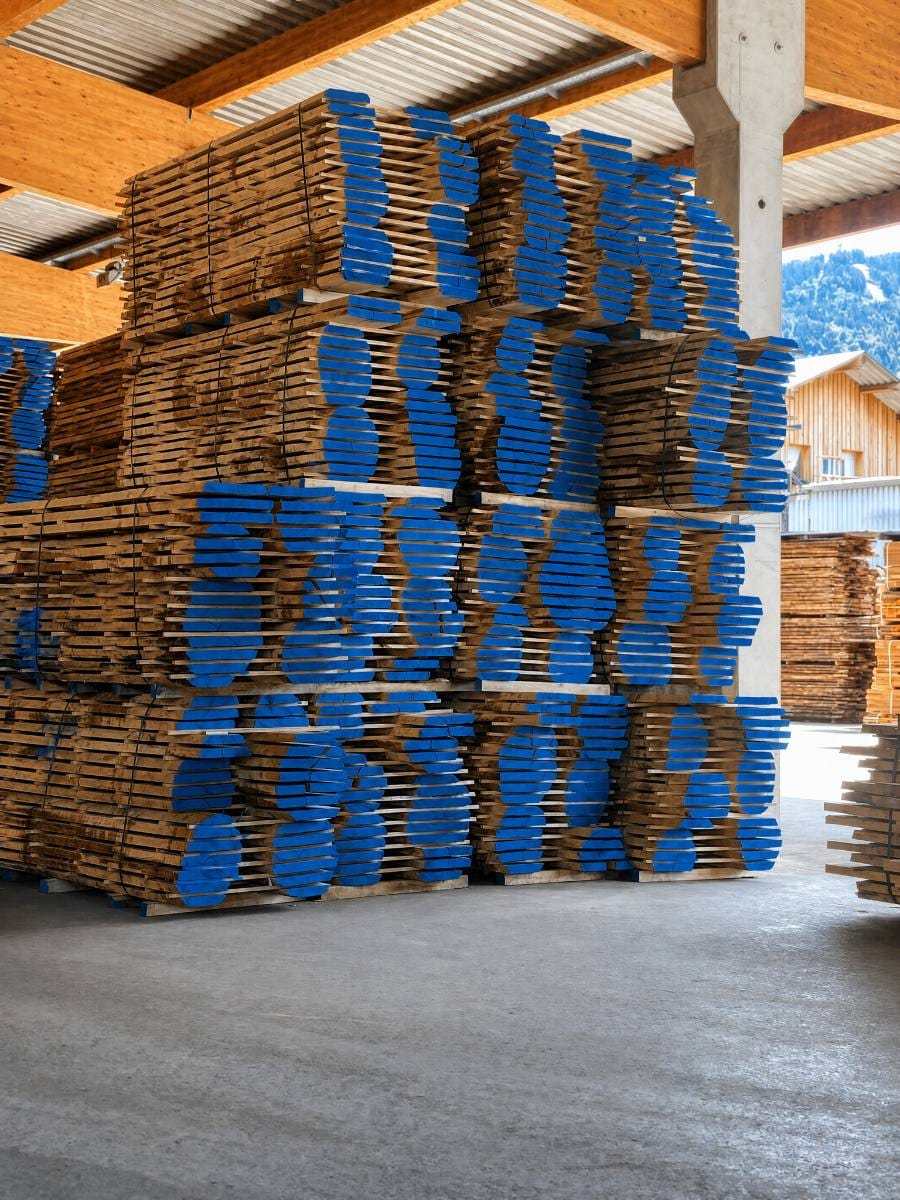
Between the forest and a joiner's bench there are more steps than one might imagine, and each can improve or spoil the wood. The Alp Timber group's supply chain exists to shorten that distance: two owned sawmills, a seasoning warehouse in Austria and one shared selection, from choosing the log to loading the truck.
Three sites, one standard
The group works across three sites. Cecconwood, in Hungary, saws oak and ash from the Pannonian basin. Lemnforest, in Romania, processes oak, lime and cherry from the Carpathians and has drying kilns for 160 m³. In Arnoldstein, Austria, 3,600 m² of warehouse house the seasoning and the preparation of loads for the markets.
Three sites means three climates, three supply areas and three sawing lines. What does not change is the way wood is read: the same selection grades, the same criteria for the log, the same vocabulary when talking to the customer. It is this consistency, more than production capacity, that makes two lots coming from two different countries comparable.
Selection starts in the forest
A log does not improve downstream. Diameter, straightness, taper, knottiness and ring shake decide in advance how many usable boards can be obtained and which grade they will end up in. That is why the assessment happens before the log enters the yard, when it can still be sent to the right processing instead of finding out after the cut.
Local origin helps twice. It shortens the time between felling and sawing, which is when fresh wood is most exposed to checks and discolouration; and it means knowing the forests the raw material comes from, which is the basis of any documented chain of custody.
Sawing: the cut decides the yield
At the sawmill the log is opened following its shape, not a fixed pattern. Cutting with the taper and the run of the grain means getting wider, more stable boards from the same piece; doing the opposite produces waste and stresses that only show later, when the wood dries.
Thicknesses are decided here, according to the end use: a flooring board, a joinery board and a cabinetmaking board are not born the same. In the group this step happens in house at both sawmills — you can read about it in detail on the Cecconwood process page and the Lemnforest one.
“Wood does not forgive shortcuts: every step skipped upstream is paid for downstream, when the board is already with the customer.”
Alp Timber Group
Protection, stacking, seasoning
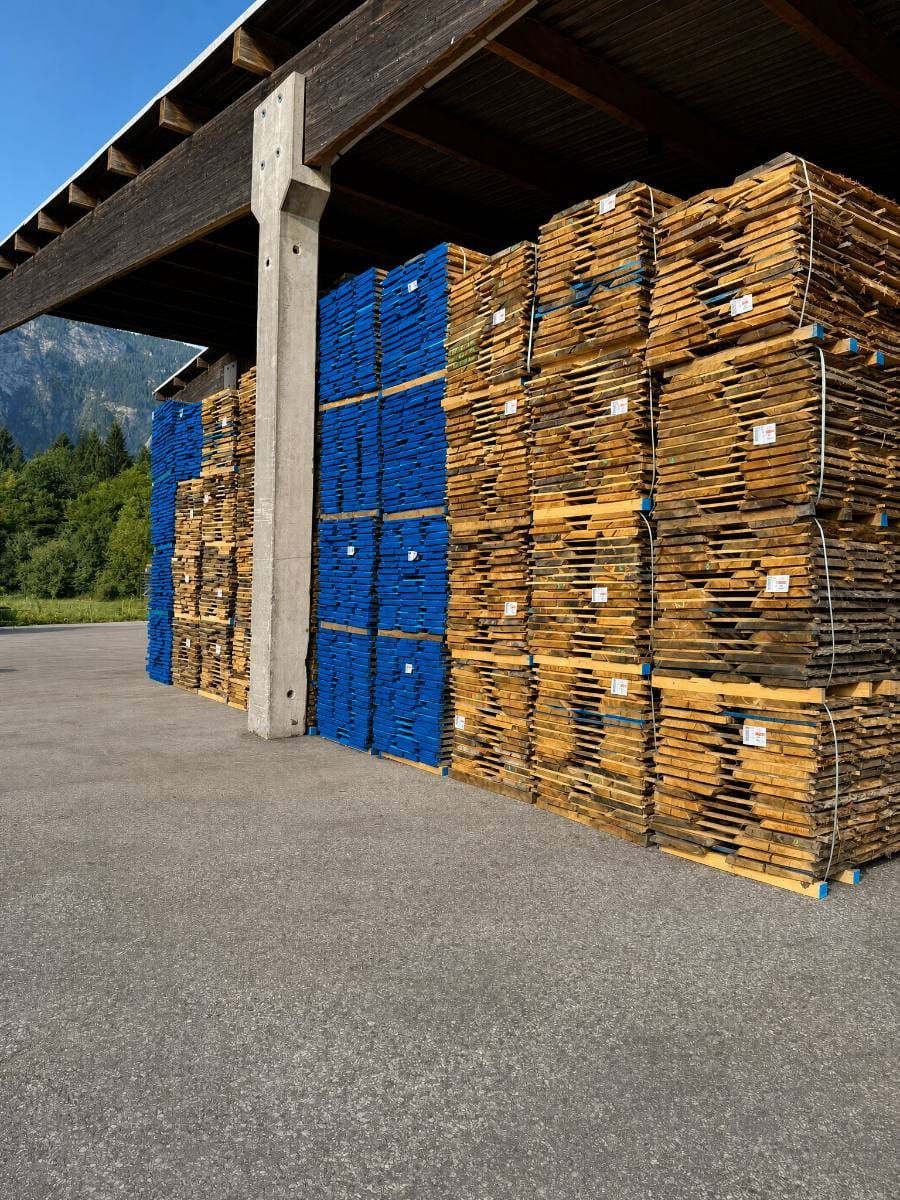
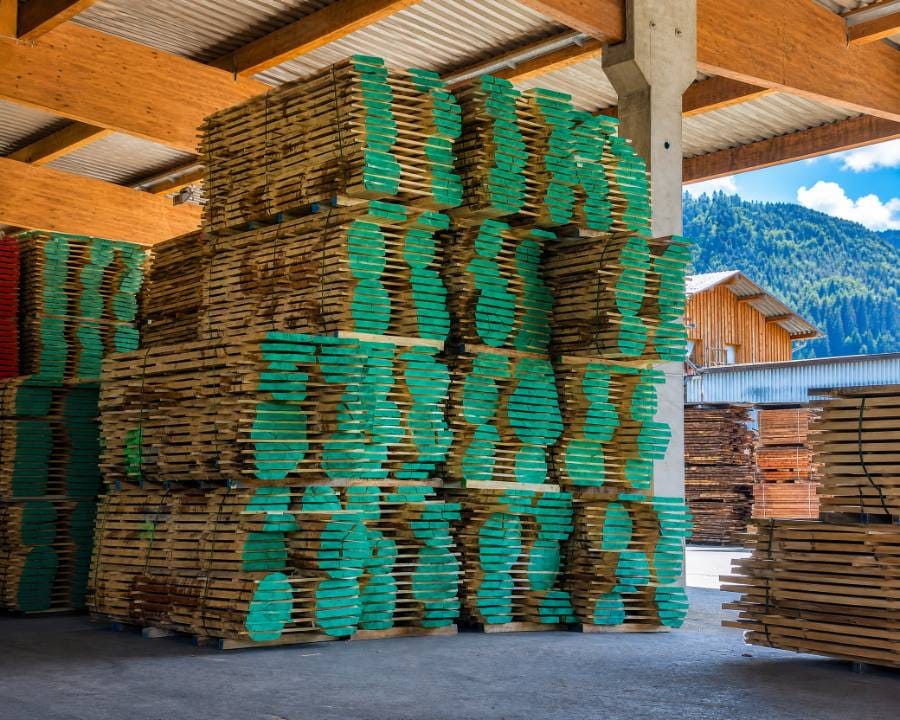
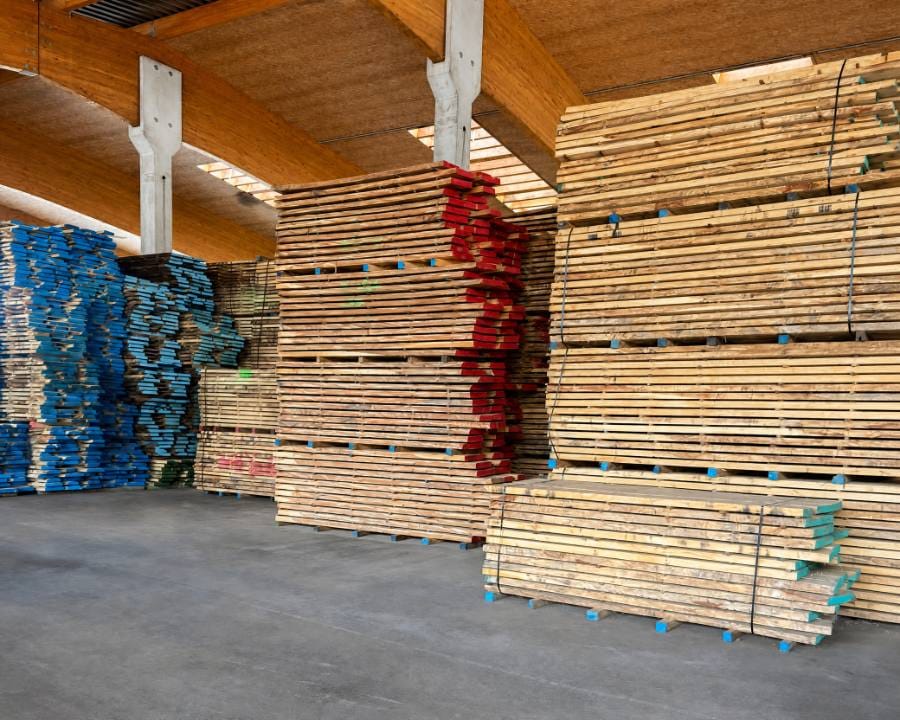
Right after cutting, the board ends are protected: the end of the board loses moisture fastest, and that is where checks start. The boards are then stacked on stickers, which keep the layers apart and let air circulate evenly through the whole stack.
From here the path splits. Some of the timber stays freshly sawn, because that is how the customer wants it. The rest goes on to seasoning — air-dried under cover, in the kiln, or one after the other — until the agreed moisture content. The Arnoldstein warehouse exists for this: to give the wood time to reach equilibrium before it leaves.
Selection grades and a common language
At the end of the chain every pack is graded. The group uses four grades — Boules, A/B, Character and Rustic — which describe how much natural figure the wood carries: from the log reassembled board by board to material that openly shows knots and features. None is better than the others in absolute terms: they are different destinations. The Grades page explains how to read them.
The same goes for the species: the eleven hardwoods on the Species page behave very differently in processing, and the right choice depends more on the end use than on aesthetic preference.
From the warehouse to the customer
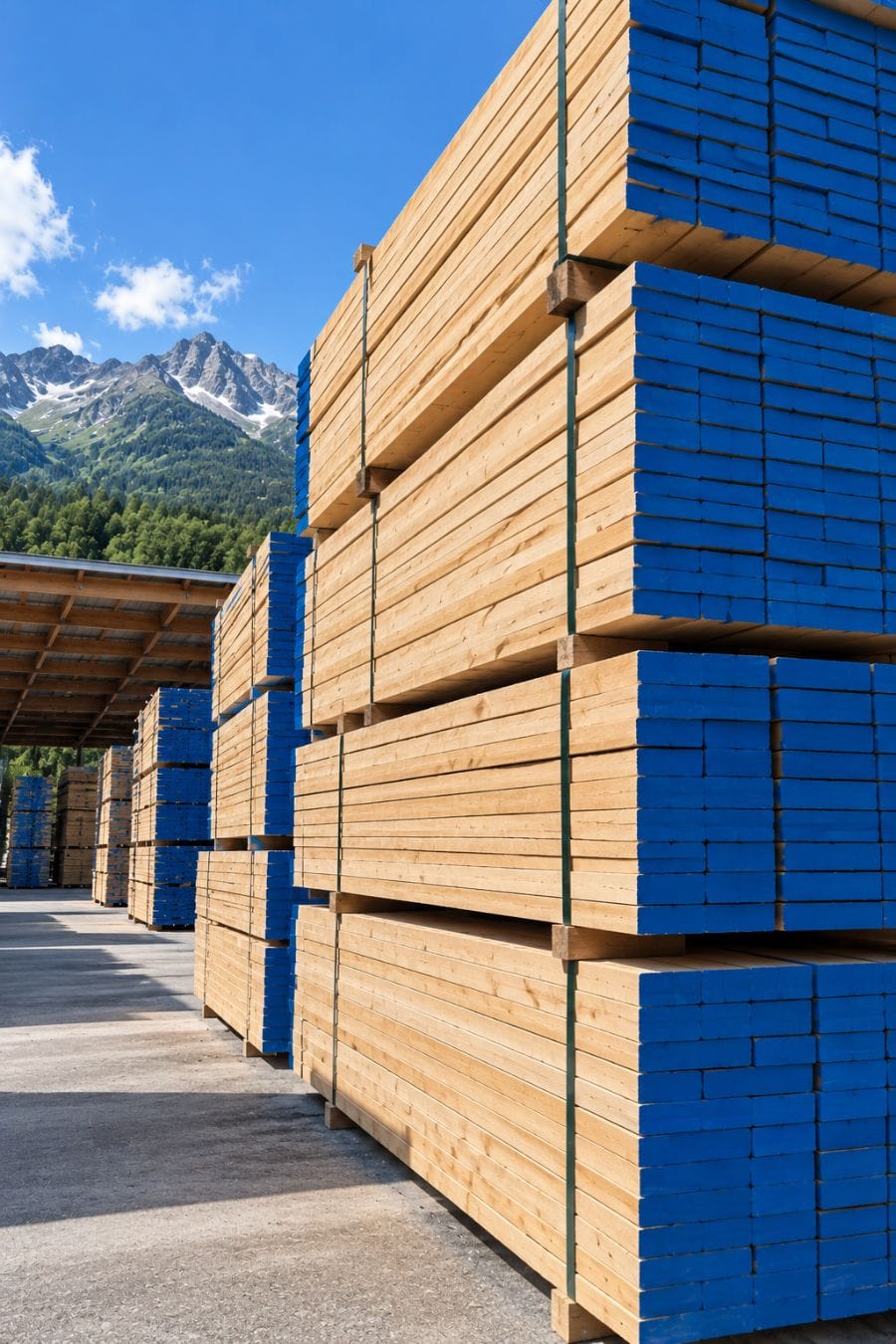
The last step is loading. Curtain-side trucks for the European markets, containers for sea freight: two ways of travelling that call for different preparation, above all in terms of moisture and packing. The group serves twelve markets across Europe, the Middle East, Asia and Africa; the full map is on the page Markets.
A short supply chain is not a logistics slogan: it is the reason a lot can be traced backwards, from the pack to the forest, when needed. It is also what makes chain-of-custody certification possible, which documents that path instead of merely declaring it.
Frequently asked questions
How many steps are there between the forest and delivery?
Six, in short: log selection, yard storage, sawing, protection and stacking, seasoning or kiln drying, loading. The group's two sawmills carry them out in house, with no intermediaries between one step and the next.
Why does it matter that the sawmills are owned by the group?
Because the selection stays the same from start to finish. When sawing is outsourced, cutting and grading criteria change from supplier to supplier, and two apparently identical lots can behave differently.
Is the timber always dried?
No. Some is supplied freshly sawn, because that is what many processes need. Kiln drying is a step the customer requests according to the end use, not an automatic treatment.
Can the origin of a lot be traced?
Yes: every pack stays labelled by species, thickness and grade throughout the chain, and that is what makes the FSC® chain of custody registered by the group's companies documentable.