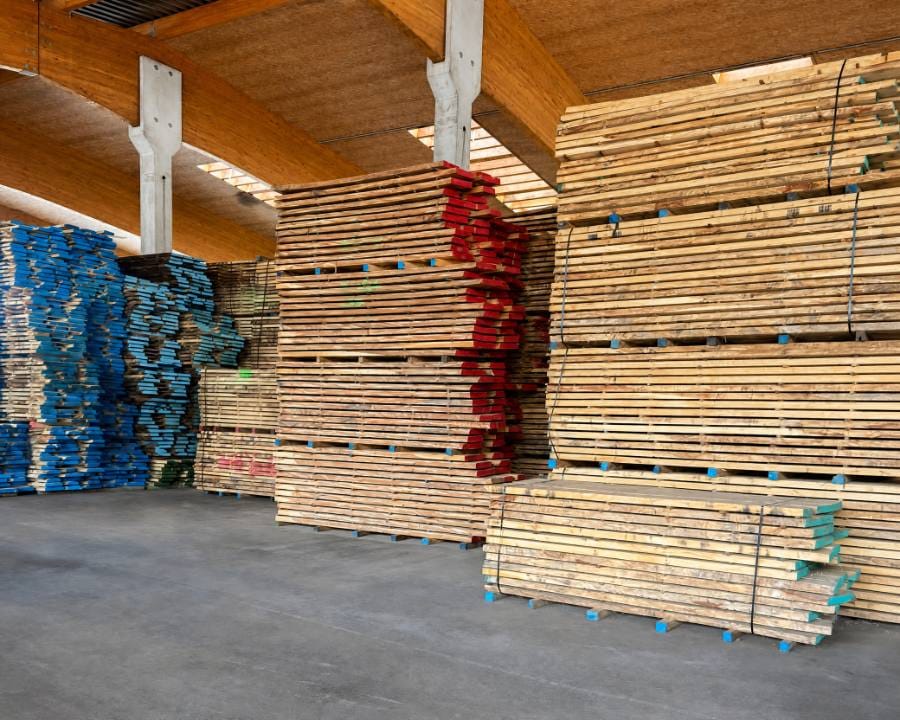
Two sawmills, two countries, two different forest regions. Cecconwood in Kálmáncsa, Hungary, and Lemnforest in Tinca, in Romania's Bihor county, are not two copies of the same plant: they do different things, and the difference is deliberate.
Kálmáncsa: freshly sawn
Cecconwood has operated since 2014 in the heart of the Pannonian basin, the great plain that stretches between the Danube and the Carpathians. The hardwoods of this area — oak and ash in particular — reach the sawmill from nearby forests, and that proximity is part of the method: the less time passes between felling and cutting, the better the wood holds up.
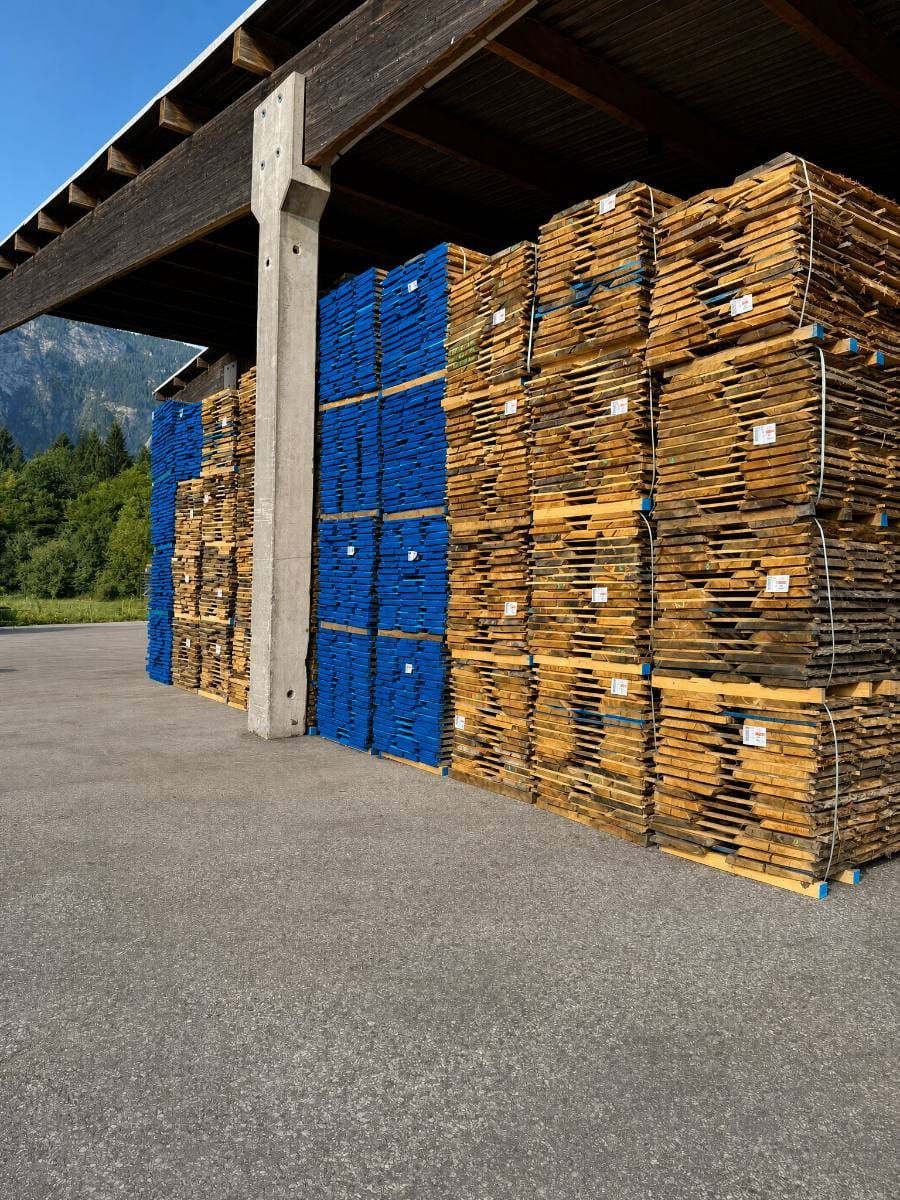
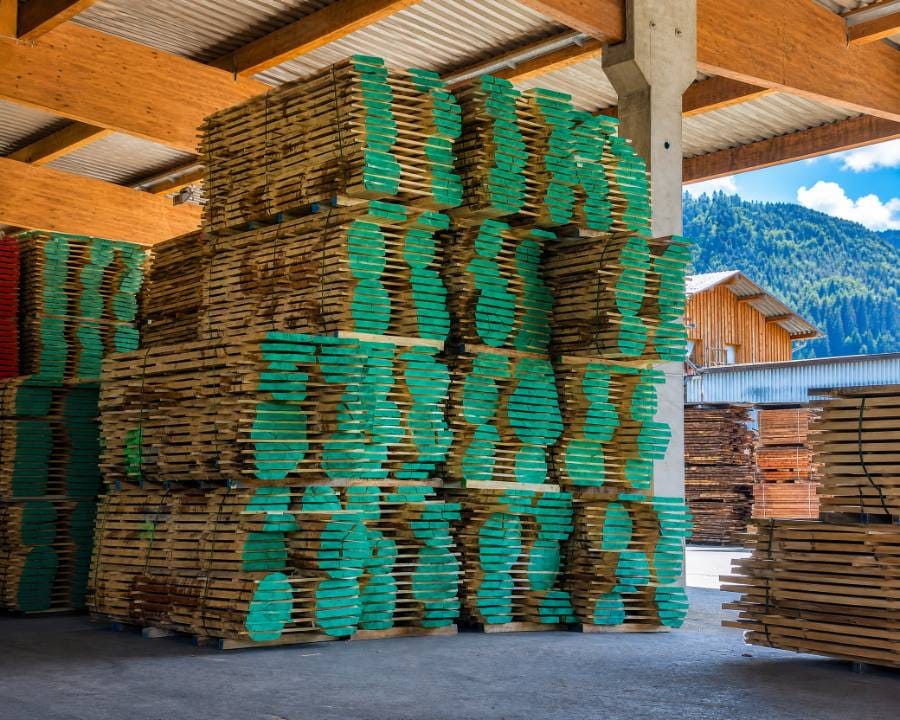
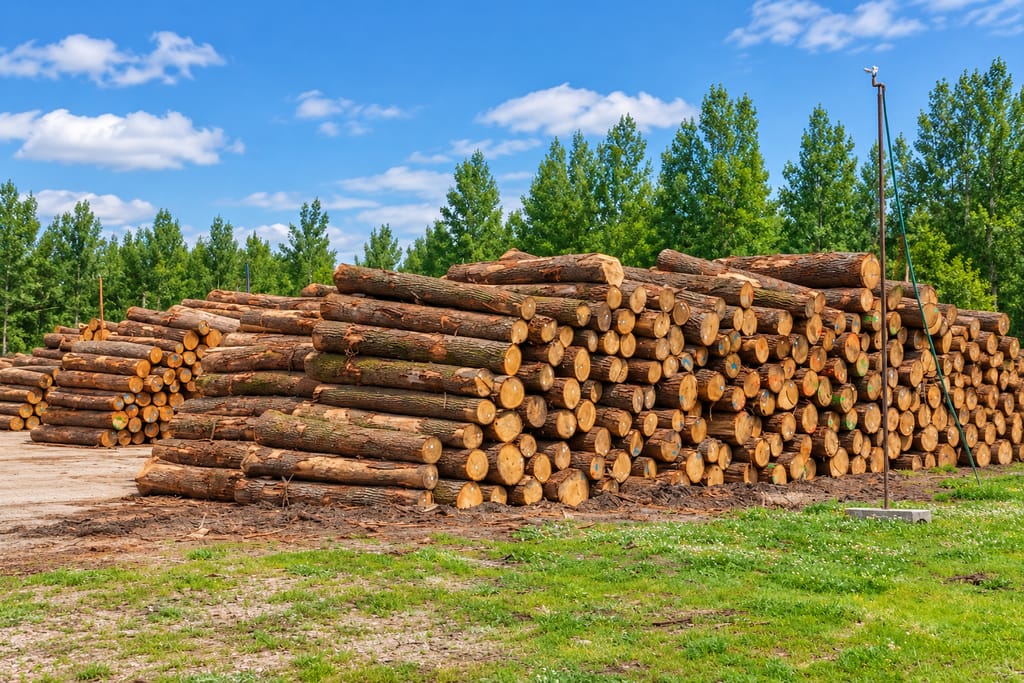
The site specialises in fresh timber. The logs are sprinkled in the yard to keep the wood moist while they wait to be sawn, then cut into boards in the thicknesses requested; right after cutting the ends are protected and the boards stacked on stickers. The product leaves freshly sawn, as logs or boards, with no intermediate steps. The full process is on the page Process.
Tinca: all the way to dried
Lemnforest works in Tinca, Bihor, on the edge of the Western Carpathians. The region is different and so are its species: alongside oak, lime and cherry. But the essential difference lies downstream of sawing.
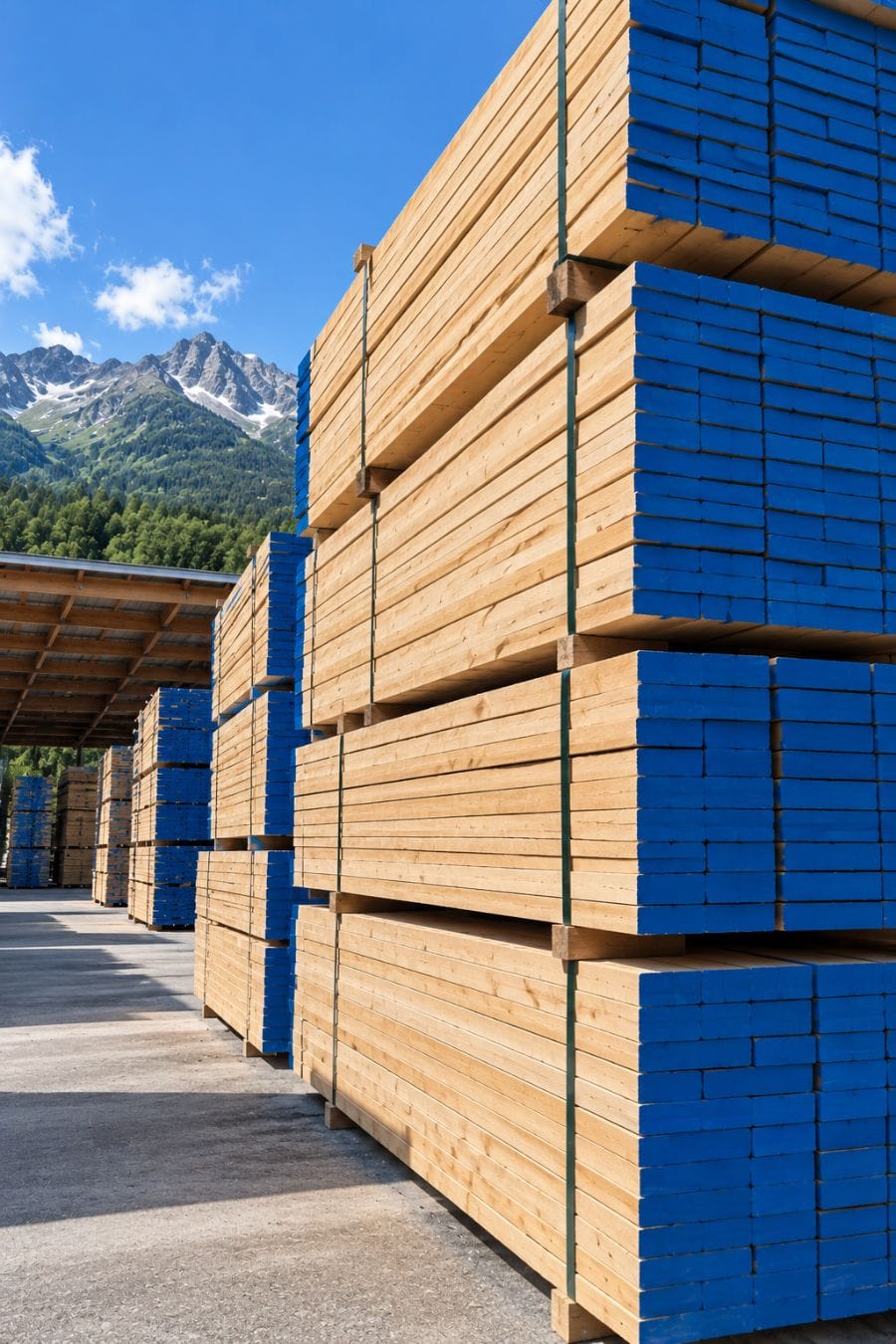
The site has drying kilns for 160 m³ and an edging line dedicated to lime. This makes it possible to cover the whole path from log to dried board in a single place: sawing, square-edging, controlled drying, packing. For lime in particular the customer can choose between fresh and kiln-dried edged boards. The detail is on the page Process.
Why two specialisations and not two identical plants
Duplicating the same processes in two countries would have cost more and yielded less. Specialising means that each site does what its forest region and its equipment allow it to do best, and that the group as a whole covers a wider range than a single large plant would.
For the customer the practical consequence is that a mixed request — fresh oak boards and dried edged lime, say — does not need two suppliers. Requests can be handled by the parent company Alp Timber, which coordinates the two sites and the seasoning in Arnoldstein.
“Two sawmills are not there to do twice as much: they are there to do two things well.”
Alp Timber Group
What is identical
The differences end where selection begins. The grades are the same — Boules, A/B, Character, Rustic — and are applied with the same criteria at both sites; this is the condition for two lots from different countries to be comparable. The same goes for the way packs are labelled by species, thickness and grade, which is also what makes the chain of custody documentable.
Both companies hold their own FSC® chain-of-custody registration: Cecconwood Kft. with licence FSC-C179440, S.C. Lemnforest Srl with licence FSC-C109707. They are separate registrations because the companies are separate, not because the criteria change.
Two regions, two raw materials
Geography is not a romantic detail: it decides which species a sawmill can process consistently. The Pannonian basin that supplies Kálmáncsa is a hardwood plain where oak and ash are widespread. The Western Carpathians that supply Tinca have different altitudes, soils and forest composition, and bring lime and cherry alongside oak.
That is why the group's range was not drawn up at a desk but comes from the forests actually around its two sawmills. Processing local species, instead of shipping them to be sawn elsewhere, shortens the time between felling and cutting and keeps the most delicate part of the chain short.
The third point: Arnoldstein
The two sawmills do not work in isolation. In Arnoldstein, Austria, the group has 3,600 m² of warehouse where the timber rests, seasons and is prepared for the markets. It is where the two chains come back together and where the loads leave for the twelve markets served, by road for Europe and by container for sea freight.
The location is no accident: the Friuli–Carinthia area is a historic crossroads between the Alpine region, Central Europe and the Adriatic ports. The group's structure is described on the page The group.
Frequently asked questions
What is the difference between Cecconwood and Lemnforest?
Cecconwood, in Hungary, specialises in freshly sawn oak and ash. Lemnforest, in Romania, processes oak, lime and cherry and has drying kilns and an edging line for lime.
Can I order from both sawmills with a single request?
Yes: requests can be handled by the parent company Alp Timber, which coordinates the two sites and the Arnoldstein warehouse.
Are the selection grades the same at both sites?
Yes. Boules, A/B, Character and Rustic are applied with the same criteria at both sawmills: this is what makes lots of different origin comparable.
Do the two companies have the same FSC® certification?
They hold two separate chain-of-custody registrations, because they are two separate companies: FSC-C179440 for Cecconwood Kft. and FSC-C109707 for S.C. Lemnforest Srl.